Processes · 30-day cavity lifecycleConcept to cavity,
Concept to cavity,
documented every step.
Most shops hand your part between three or four vendors. We run it end-to-end, which is why we can promise a 30-day new-tool window without tripping over the truth.
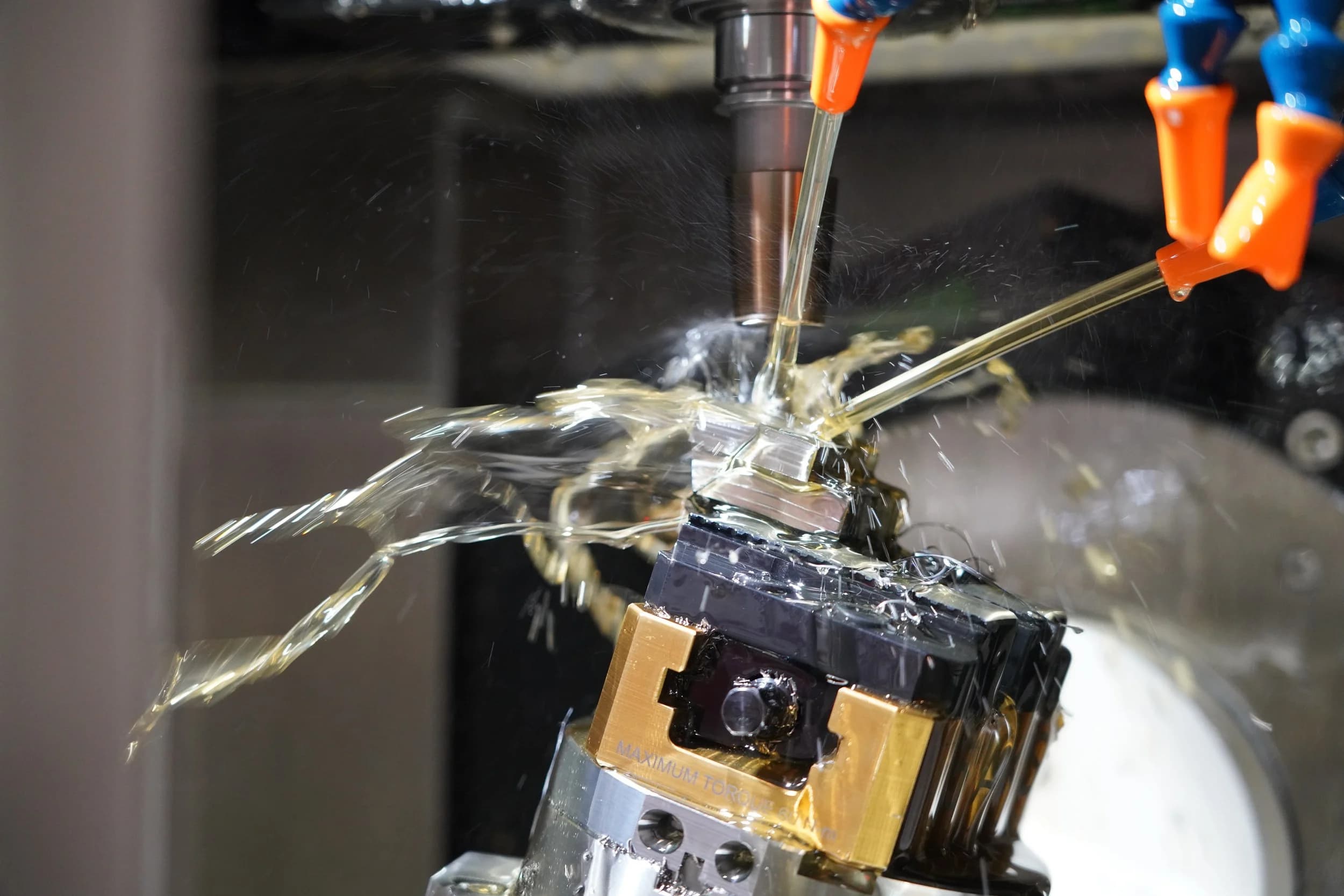
01 · CONCEPT
PHASE
Phase 01 of 06
Concept
DfM consult · mold-flow sim · material selection
Duration
Day 0–3
Owner
Design lead
Deliverable
Feasibility memo
Go/no-go
Gate review
Three disciplines.
Capability matrixMicro Molding
- 01Shot weights 0.004–2.5 g
- 02PEEK, LCP, COC, Ultem, silicone
- 03Insert + over-molding
- 04Single to multi-cavity tooling
- 05Documented process windows
Micro Machining
- 015-axis micro milling
- 02Sub-micron feature sizes
- 03Stainless, Ti, W-carbide
- 04Surface grinding
- 05Lights-out capable
Product Design
- 01Early-stage DfM
- 02Mold-flow analysis
- 03Tolerance stack studies
- 04Material down-selection
- 05Regulatory-friendly docs
04 / FAQ
Questions we get before the PO.
The ten things prospects ask before signing a tooling agreement, answered the way our engineers would answer them on the phone.
- 01 / 10
What is the minimum shot weight you can micro-mold?
- Our Sodick LP20EH3 micro injection press handles shot weights from 0.004 g up to 2.5 g with ±0.3% repeatability. The two-stage screw-and-plunger architecture is what makes sub-gram shots dimensionally stable — conventional presses lose process control well before that range.
- 02 / 10
What tolerances can you hold on micro-molded parts?
- ±2 µm is routine on cavity-defining features. Tighter tolerances are available after DfM review and mold-flow simulation. Every tolerance commitment is backed by a documented GR&R study — we do not quote tolerances we cannot measure repeatably.
- 03 / 10
Which materials do you process?
- PEEK (including medical grades), LCP, COC, Ultem, and other high-performance thermoplastics. Tool temperatures up to 220 °C support high-flow resins, and cavity pressure runs under closed-loop control for shot-to-shot consistency. Bio-compatible plastics for implantable and fluid-path applications are routine.
- 04 / 10
How quickly will I get a quote after submitting an RFQ?
- First sales response within 4 business hours. A full quote with tooling recommendation and a realistic lead-time estimate follows within 48 hours of receiving prints or CAD. Quoting includes a feasibility memo — if the part has a manufacturability issue, you hear it before you sign a PO.
- 05 / 10
How fast can you build a production mold?
- 30 days from concept to validated cavity is our standard cadence — DfM, mold-flow simulation, tool design, fabrication, T1 sampling, and first-article inspection included. Expedite paths are available on a case-by-case basis when the program requires it.
- 06 / 10
Are you ISO certified?
- Yes — ISO 9001:2015. Quality records, tooling documentation, and process data are retained for the duration of the program plus 7 years to support medical-device traceability and regulatory audits.
- 07 / 10
Do you support insert molding and over-molding?
- Both. Insert molding runs on the LP20EH3 with feed-integrated tooling, presenting metal or ceramic inserts at near-MIM cycle times. Over-molding uses matched A/B tooling on the same press cell with sequential single-shot architecture.
- 08 / 10
Do you do 5-axis micro machining as well as molding?
- Yes. Our Jingdiao GRA100 (60 k RPM spindle, sub-micron positioning) machines tool steel, carbide, stainless, titanium, and tungsten — for the geometries that injection will not tolerate, and for the tooling inserts that produce the molds themselves. Surface finishes to Ra 0.1 µm are achievable.
- 09 / 10
What industries do you serve?
- Medical device is the primary focus — catheter components, drug-delivery parts, surgical instruments, diagnostic disposables. We also build for diagnostics, aerospace, defense, microelectronics, and robotics. One tolerance standard applies across every sector.
- 10 / 10
Will you sign an NDA before reviewing my design?
- Yes. Mutual NDA templates are on hand and we will execute one promptly, before any proprietary information moves. Email sales@futuremicromoldllc.com with "NDA request" in the subject line to start.